





































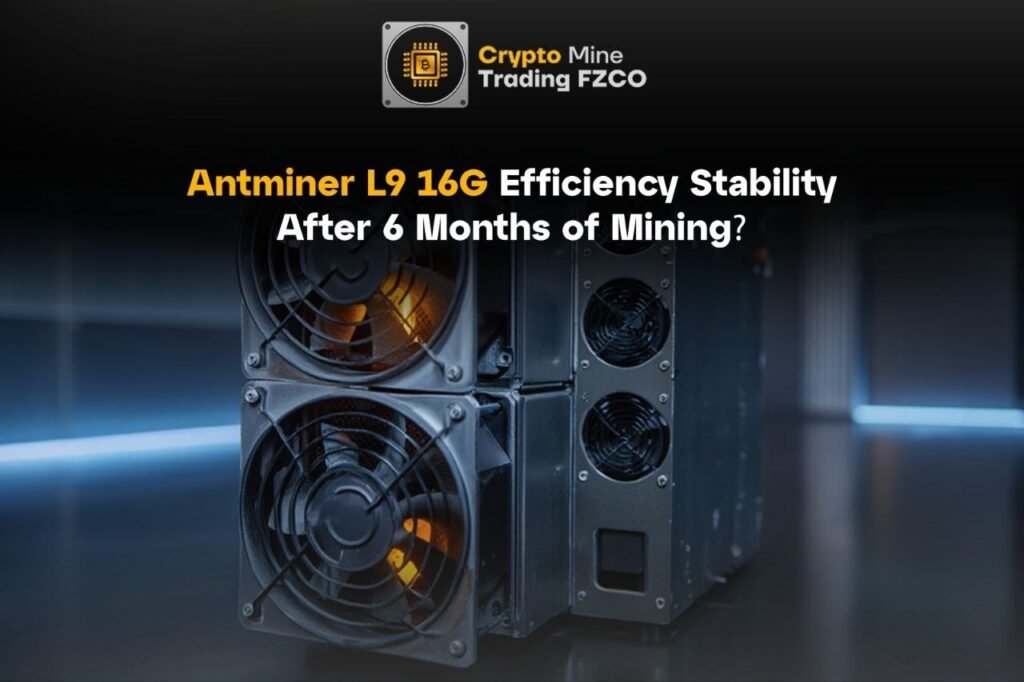
Buying a high-efficiency miner is one thing. Keeping that efficiency stable after months of continuous operation is where real mining performance is tested.
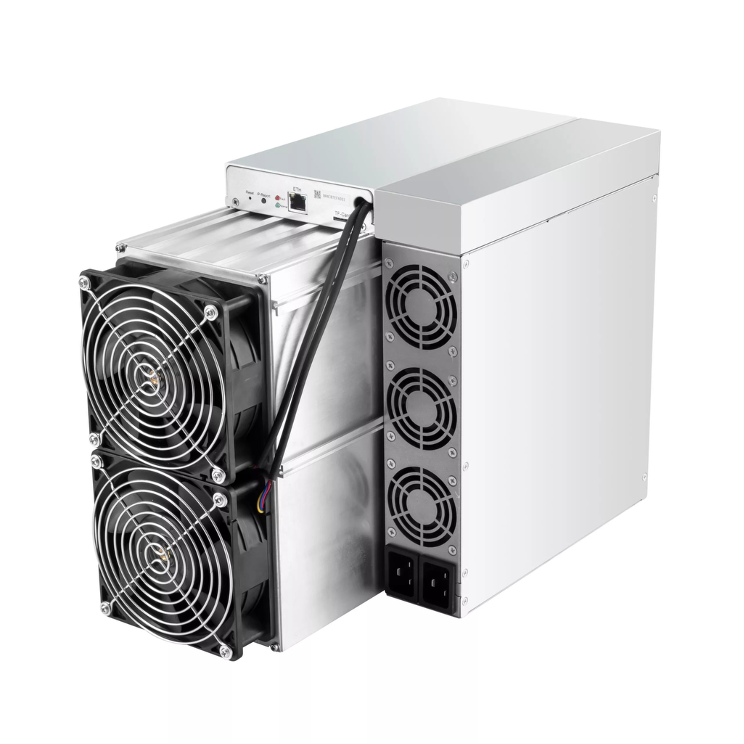
The Antminer L9 16G is known for strong Scrypt efficiency on paper but what happens after 6 months of 24/7 mining? Does it hold performance, or does it slowly lose its edge?
Let’s break down what actually happens in real conditions.
What “Efficiency Stability” Really Means
Efficiency isn’t just the initial 0.21 J/MH spec.
True efficiency stability means:
- Consistent power-to-output ratio over time
- No significant hashrate drops
- Controlled power consumption under load
If any of these shift, your ROI starts to shrink even if the machine is still running.
What Happens in the First 30–60 Days
In the early phase, most L9 units perform close to advertised specs.
Typical behavior:
- Stable hashrate
- Consistent power draw
- Minimal thermal stress
This is the peak efficiency window, assuming proper setup.
What Changes After 90 Days
This is where differences begin to show between setups.
Common early shifts:
- Slight efficiency drop due to dust buildup
- Increased fan load
- Minor temperature fluctuations
Well-maintained setups barely notice this. Poor setups start losing performance.
After 6 Months: Real Performance Scenario
After half a year of continuous mining, performance depends almost entirely on environment and maintenance.
In Optimized Setups:
- Efficiency remains close to original levels
- Stable hashrate with minimal fluctuation
- Controlled temperatures
- No major hardware stress
In Poor Setups:
- Noticeable efficiency drop
- Higher power consumption for same output
- Thermal throttling
- Increased downtime risk
👉 The machine doesn’t fail but it becomes less profitable over time.
Why Efficiency Drops Over Time
The L9 16G itself is not the problem. The environment is.
Key factors that impact long-term efficiency:
1. Heat Accumulation
Continuous high temperatures reduce chip performance.
2. Dust and Airflow Blockage
Restricted airflow increases internal heat.
3. Power Instability
Voltage fluctuations reduce efficiency consistency.
4. Cooling System Stress
Fans working harder over time lead to inefficiencies.
How Smart Miners Maintain Efficiency
Miners who maintain profitability treat efficiency as a managed metric, not a fixed spec.
Their approach:
1. Regular Cleaning
Prevent dust buildup and airflow restriction
2. Stable Cooling Environment
Maintain consistent temperature and ventilation
3. Power Quality Control
Use stable, well-distributed electrical systems
4. Performance Monitoring
Track hashrate and efficiency trends weekly
5. Preventive Maintenance
Fix small issues before they scale
The Real ROI Impact After 6 Months
Even a small efficiency drop matters.
Example impact:
- 3–5% efficiency loss = noticeable profit reduction
- 8–10% loss = major ROI impact over time
This is why long-term mining is about maintaining performance, not just achieving it once.
Does Antminer L9 16G Hold Its Value?
Yes but conditionally.
It performs well long term if:
- Environment is controlled
- Cooling is optimized
- Maintenance is consistent
It underperforms if:
- Heat is unmanaged
- Setup is unstable
- Monitoring is ignored
Final Verdict
The Antminer L9 16G is built for strong efficiency but that efficiency is not permanent by default.
After 6 months:
- The machine can still perform near peak levels
- Or it can slowly lose profitability
The difference is not hardware it’s how the setup is managed.
In 2026, mining success comes from maintaining performance over time not just buying efficient machines.