





































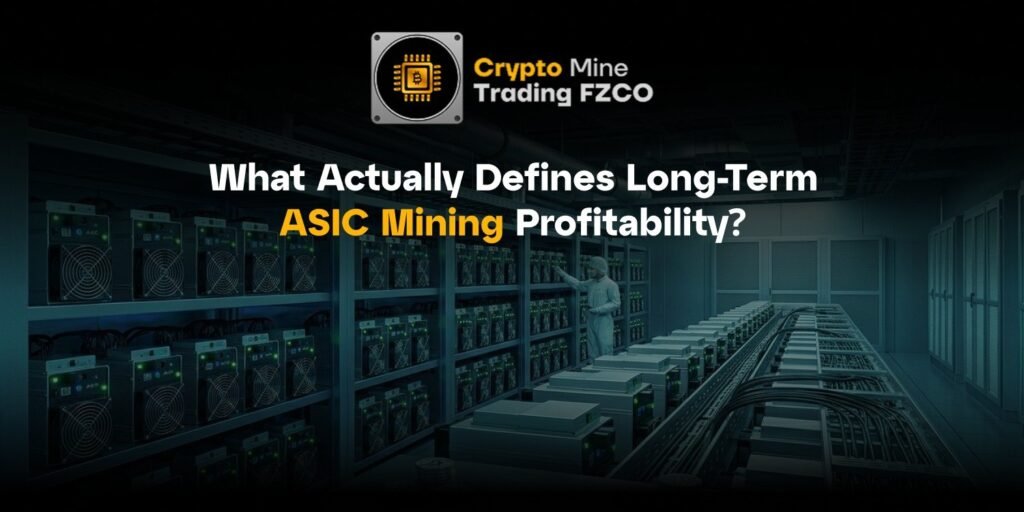
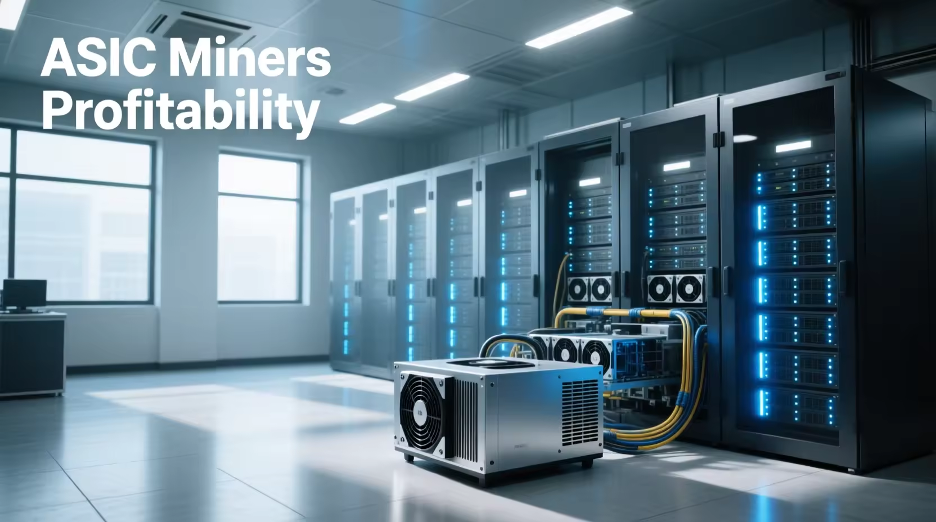
Many miners believe profitability comes from buying powerful hardware. But in modern mining, long-term profitability depends on far more than hashrate.
A machine can generate strong revenue in the beginning and still become inefficient over time if the surrounding system is poorly managed.
This is why professional mining operations focus less on hype and more on operational stability.
Because real mining profitability is built through:
- Efficiency consistency
- Infrastructure quality
- Thermal control
- Continuous uptime
- Long-term operational discipline
Why Hashrate Alone Is Misleading
Hashrate is only one part of mining performance.
Two miners using the same ASIC can experience completely different profitability because of:
- Electricity pricing
- Cooling quality
- Airflow management
- Environmental conditions
- Power stability
A high hashrate machine operating inefficiently can generate lower long-term returns than a balanced system running efficiently.
Efficiency Is the Foundation of Profitability
Efficiency determines:
- How much energy is consumed
- How much power is wasted
- How much operational cost increases over time
Even small efficiency improvements matter because ASICs run continuously under heavy load.
Lower operational waste leads to:
- Better margins
- Higher long-term sustainability
- Stronger ROI retention
This is why newer-generation ASICs increasingly focus on energy optimization rather than raw power alone.
Electricity Cost Changes Everything
Electricity is the largest recurring expense in ASIC mining.
Long-term profitability depends heavily on:
- Power rates
- Infrastructure efficiency
- Stable electrical systems
High power consumption without proper optimization slowly destroys margins.
This is especially important in regions with rising electricity prices where operational efficiency becomes critical for survival.
Thermal Stability Matters More Than Most Miners Realize
Heat directly affects mining performance.
Poor thermal management causes:
- Efficiency decline
- Hardware stress
- Increased power waste
- Reduced component lifespan
Stable cooling systems help ASICs maintain:
- Consistent output
- Better efficiency retention
- Lower operational degradation over time
This is why modern mining farms invest heavily in:
- Airflow optimization
- Cooling architecture
- Environmental control systems
Uptime Is One of the Most Valuable Metrics
Mining revenue depends on continuous operation.
Every interruption:
- Reduces daily output
- Creates operational instability
- Impacts long-term revenue consistency
Professional mining farms prioritize:
- Stable uptime
- Preventive maintenance
- System monitoring
because consistent operation is more valuable than short-term performance spikes.
Infrastructure Quality Defines Scalability
Many mining setups fail because infrastructure cannot support long-term expansion.
Weak infrastructure creates:
- Power instability
- Cooling imbalance
- Thermal concentration
- Operational inefficiency
Profitable mining farms are designed as complete systems rather than collections of machines.
The strongest operations optimize:
- Rack design
- Power distribution
- Cooling flow
- Environmental consistency
before scaling hardware count.
The Hidden Cost of Poor System Design
Most profitability losses happen gradually.
They come from:
- Minor thermal imbalance
- Small efficiency drops
- Repeated downtime
- Unstable airflow
- Inconsistent power delivery
These issues may seem small individually, but over months they create major financial impact.
Long-term profitability is often lost through slow operational waste rather than sudden hardware failure.
Why Newer ASICs Focus on Efficiency
The mining industry is shifting toward:
- Lower energy waste
- Better thermal management
- Stable operational performance
Modern ASICs are increasingly built for:
- Continuous industrial operation
- Infrastructure compatibility
- Long-term efficiency retention
This reflects the reality that mining profitability is becoming infrastructure-driven rather than hardware-driven.
The Difference Between Short-Term and Long-Term Mining Success
Short-term mining success often focuses on:
- Launch profitability
- Daily revenue screenshots
- Peak hashrate
Long-term success depends on:
- Controlled operating cost
- Stable efficiency
- Sustainable infrastructure
- Predictable performance
The farms that survive market fluctuations are usually the ones with the strongest operational foundations.
What Professional Mining Farms Prioritize
Large-scale operators focus on:
- Thermal efficiency
- Stable electrical systems
- Infrastructure scalability
- Preventive maintenance
- Environmental optimization
They understand that mining hardware performs only as well as the environment supporting it.
The New Reality of ASIC Mining
Mining is becoming more similar to:
- Data center management
- Infrastructure engineering
- High-density compute optimization
Profitability is increasingly tied to:
- System stability
- Operational intelligence
- Infrastructure efficiency
rather than raw hardware power alone.
Final Verdict
Long-term ASIC mining profitability is not defined by hashrate alone.
It is defined by how efficiently a mining system performs over time.
The most profitable operations focus on:
- Stable uptime
- Controlled thermal conditions
- Efficient power usage
- Infrastructure optimization
- Long-term operational consistency
Because in modern mining: The best hardware only becomes profitable when supported by the right system.