






































Introduction
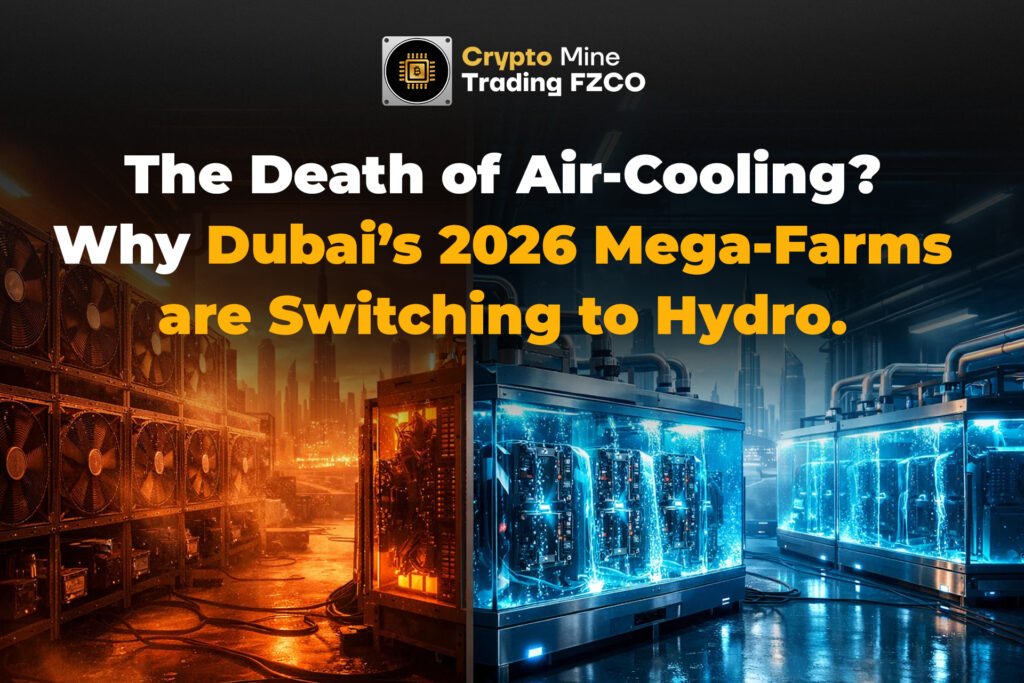
As crypto mining scales rapidly in Dubai, one major shift is becoming impossible to ignore — the move from air-cooled systems to hydro-cooled mining infrastructure.
What was once the industry standard is now being questioned. In 2026, large-scale UAE mining farms are rethinking their cooling strategies to improve efficiency, reduce downtime, and stay competitive.
So, is this truly the end of air-cooling?
Why Air-Cooling Is Losing Ground
Air-cooled mining machines have been widely used due to their simplicity and lower initial setup cost. However, as operations scale, several limitations become clear — especially in Dubai’s environment.
1. Heat Management Challenges
Dubai’s high temperatures make it difficult for air-cooled systems to maintain optimal performance. As mining density increases, heat buildup becomes harder to control.
2. Increased Power Consumption
Air-cooled farms require additional ventilation systems, industrial fans, and cooling support, which significantly increases electricity usage.
3. Higher Maintenance Requirements
Dust accumulation and airflow blockages can reduce efficiency and lead to frequent maintenance cycles.
4. Performance Instability
When temperatures rise, machines may throttle performance to prevent overheating, directly impacting mining output.
Why Hydro-Cooling Is Taking Over in 2026
Hydro-cooled mining machines are rapidly becoming the preferred choice for Dubai’s mega mining farms due to their ability to solve the limitations of air-cooling.
1. Superior Heat Dissipation
Water transfers heat more efficiently than air, allowing machines to maintain stable operating temperatures even under heavy loads.
2. Lower Total Energy Consumption
While hydro systems require initial investment, they reduce the need for large-scale air circulation systems, lowering overall energy costs.
3. Higher Mining Density
Hydro-cooled setups allow farms to run more machines in less space without overheating, maximizing infrastructure efficiency.
4. Improved Hardware Lifespan
Stable temperatures reduce wear and tear on components, extending the life of mining machines.
5. Consistent Performance Output
Unlike air-cooled systems, hydro-cooled machines maintain steady hash rates without thermal drops.
Dubai’s Mega-Farms Are Scaling Differently
In 2026, mining farms in Dubai are no longer small or experimental they are industrial-scale operations.
These farms prioritize:
- Maximum uptime
- Energy optimization
- Space efficiency
- Long-term ROI
Hydro-cooling aligns perfectly with these goals, making it the preferred infrastructure choice for serious investors.
Cost vs Long-Term Value
One of the biggest concerns with hydro-cooling is the higher upfront investment.
However, when evaluated over time, hydro systems often deliver:
- Lower electricity costs
- Reduced maintenance expenses
- Higher consistent output
- Better ROI stability
For large-scale mining farms, the long-term savings often outweigh the initial setup cost.
Is Air-Cooling Really Dead?
Not entirely. Air-cooled mining machines still have a place in:
- Small-scale setups
- Home mining environments
- Budget-conscious operations
However, for industrial farms in Dubai, hydro-cooling is quickly becoming the dominant standard.
Final Thoughts
The shift from air-cooling to hydro-cooling marks a major evolution in the crypto mining industry.
Dubai’s 2026 mega-farms are leading this transition by adopting more efficient, scalable, and performance-driven cooling systems.
While air-cooling may still serve smaller operations, the future of large-scale mining clearly belongs to hydro-cooled infrastructure.
For investors looking to stay competitive, adapting to this shift is no longer optional it’s essential.