





































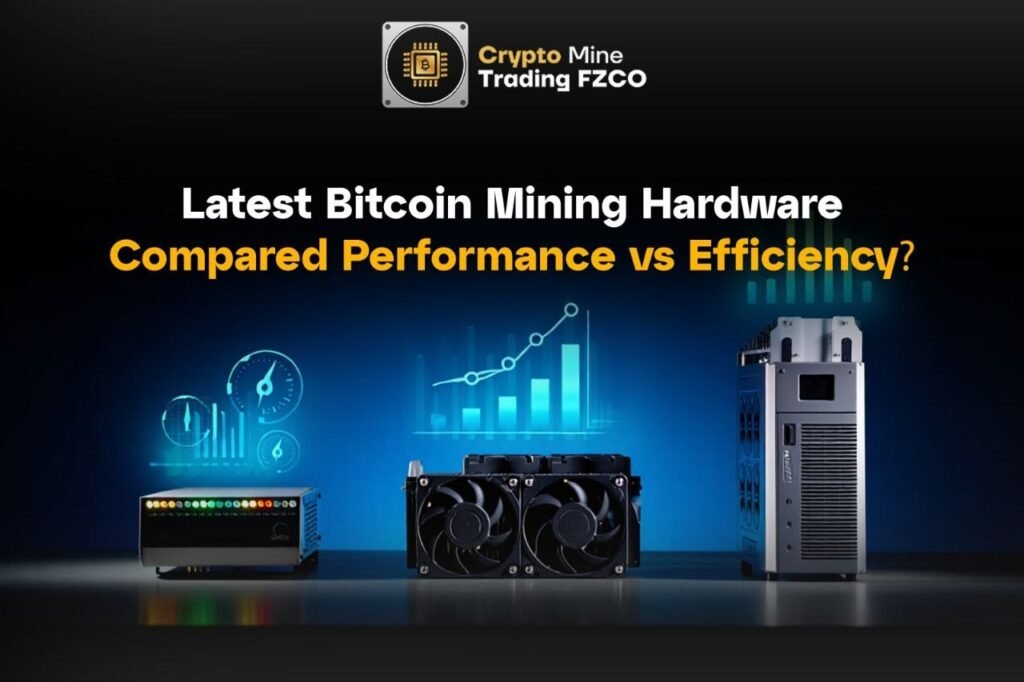
Bitcoin mining hardware in 2026 is more advanced than ever but also more misunderstood. Many miners still focus on hashrate (performance), while ignoring the real driver of profit: efficiency (J/TH).
The truth is simple: modern mining success is no longer about who has the most powerful machine, but who runs the most efficient one.
Performance vs Efficiency What Really Matters
Performance (Hashrate)
- Measures raw mining power (TH/s)
- Higher numbers mean more computations per second
- Looks impressive but doesn’t guarantee profit
Efficiency (J/TH)
- Measures energy used per unit of work
- Lower number = less electricity cost per hash
- Directly impacts ROI and profitability
In 2026, efficiency matters more than peak performance because electricity cost defines survival.
1. Why High Hashrate Alone Is Not Enough
Many new ASIC miners advertise extreme hashrates, but:
- High power consumption reduces profit margins
- Heat generation increases operational cost
- Efficiency drops under real-world conditions
A machine with better efficiency and moderate hashrate often outperforms high-hashrate inefficient models over time.
2. Efficiency Gap Is the Real Competitive Edge
Latest mining hardware is now competing in a tight efficiency range:
- Modern miners: ~13–16 J/TH
- Older generation: 30+ J/TH
This gap determines:
- Electricity cost per Bitcoin mined
- Break-even point
- Long-term profitability
Even small efficiency improvements create large ROI differences over time.
3. Real-World Mining Performance vs Spec Sheets
Spec sheets show ideal conditions. Real mining conditions include:
- Heat fluctuations
- Continuous 24/7 load
- Power instability
- Environmental stress
This is why:
- Some “high-performance” miners underdeliver
- Efficient miners maintain stable output longer
Real profitability depends on consistent performance, not peak numbers.
4. Electricity Cost Changes Everything
In Bitcoin mining, electricity is the biggest operational cost.
- Low efficiency = higher electricity burn
- High efficiency = sustainable mining model
Even a small difference in J/TH can decide whether a machine is profitable or loss-making.
5. New Generation Hardware Focus Shift
Latest ASIC mining machines are designed differently:
- Efficiency-first chip architecture
- Improved thermal systems
- Better power management
- Stable long-term output
This shift shows the industry moving from:
“Max hashrate competition”
to
“Sustainable profit engineering”
6. ROI Reality in 2026 Mining
ROI depends on:
- Electricity rate
- Hardware efficiency
- Uptime stability
- Market difficulty
Hardware alone doesn’t guarantee ROI anymore operation strategy matters equally.
7. What Smart Miners Focus On
Successful miners prioritize:
- Efficiency over raw power
- Stable environments
- Cooling optimization
- Long-term uptime
This is how they outperform others using similar or even better hardware.
Final Verdict
The latest Bitcoin mining hardware is more powerful than ever—but power alone is not profit.
In 2026:
- Performance defines potential
- Efficiency defines profit
The smartest miners don’t chase the highest hashrate—they choose the most efficient machine for long-term ROI stability.