





































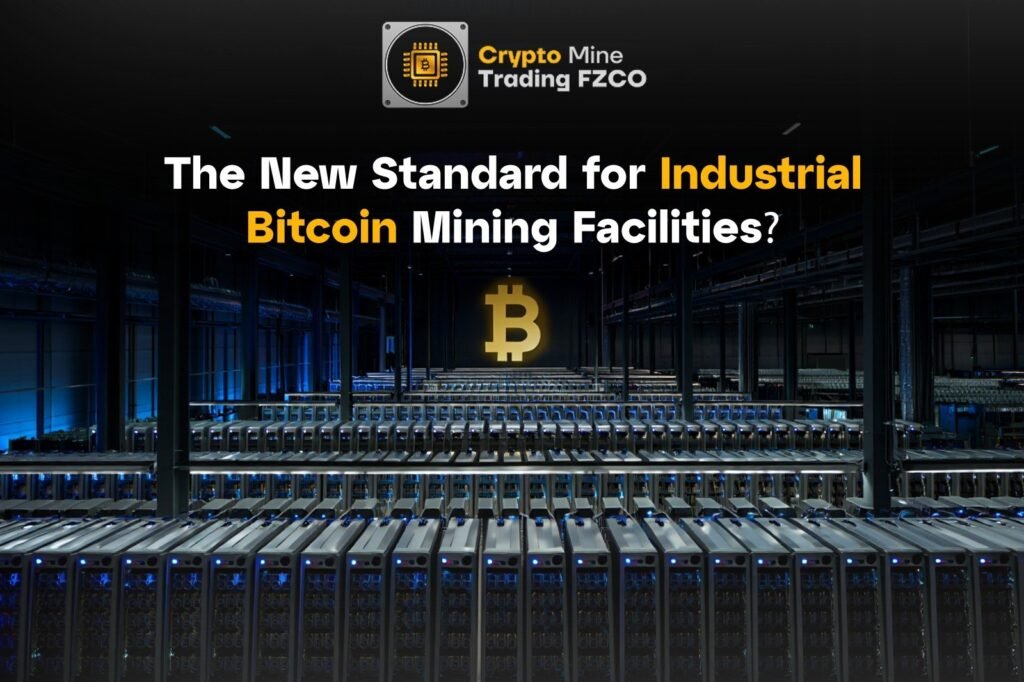

The Bitcoin mining industry has evolved dramatically over the past decade. What once consisted of small mining rooms and individual operators has transformed into a highly competitive industry driven by large-scale infrastructure, advanced engineering, and operational efficiency. As mining technology continues to advance, the expectations placed on mining facilities are changing as well.
Today, industrial Bitcoin mining facilities are no longer judged solely by the number of machines they operate. The new standard focuses on infrastructure quality, cooling performance, power efficiency, environmental control, uptime, and long-term operational sustainability. Mining has become an infrastructure business where performance depends on the strength of the systems supporting the hardware.
Mining Has Moved Beyond Hardware-Centric Thinking
For many years, mining success was closely associated with acquiring the latest ASIC hardware. While hardware remains important, modern industrial facilities recognize that equipment alone cannot deliver consistent performance.
Today’s leading operations focus on:
- Infrastructure planning
- Cooling architecture
- Power distribution
- Airflow management
- Operational monitoring
This shift reflects a growing understanding that mining profitability depends on how efficiently hardware can operate over time.
The most successful facilities are often those with the strongest operational foundations.
Infrastructure Is Becoming the Competitive Advantage
As mining competition increases, infrastructure quality is becoming a major differentiator.
Modern industrial facilities invest heavily in:
- Scalable electrical systems
- Advanced cooling solutions
- Environmental monitoring
- Facility optimization
- Operational automation
These investments help operators maintain efficiency while reducing long-term operational risks.
Infrastructure has become one of the most valuable assets in modern mining operations.
Cooling Is Now a Core Design Priority
The increasing performance of modern ASIC miners has created greater thermal demands across mining environments.
As machine density grows, effective cooling becomes essential for:
- Hardware protection
- Operational stability
- Energy efficiency
- Long-term performance
Industrial mining facilities are increasingly adopting:
- Advanced airflow engineering
- Hydro cooling technologies
- Precision environmental controls
- Intelligent thermal monitoring
Cooling is no longer viewed as a support system. It is a fundamental part of mining performance.
Uptime Has Become a Key Performance Metric
In modern mining, uptime is often more valuable than short-term output gains.
Every interruption can affect:
- Mining productivity
- Operational efficiency
- Revenue generation
- Infrastructure performance
As a result, industrial facilities prioritize:
- Reliable infrastructure
- Preventive maintenance
- Environmental stability
- Real-time monitoring
Continuous operation has become one of the defining characteristics of successful mining facilities.
Environmental Control Is More Important Than Ever
Temperature is only one part of a controlled mining environment.
Professional facilities also manage:
- Airflow consistency
- Humidity levels
- Dust exposure
- Heat distribution
- Thermal stability
These environmental factors directly influence hardware reliability and operational efficiency.
Modern mining facilities increasingly resemble enterprise data centers because both industries depend on environmental precision.
Power Efficiency Defines Long-Term Profitability
Electricity remains one of the largest operational expenses in Bitcoin mining.
The new generation of industrial facilities focuses heavily on:
- Efficient power distribution
- Infrastructure optimization
- Reduced energy waste
- Stable electrical performance
Improving power efficiency helps operators maintain stronger profitability even during challenging market conditions.
Energy management is now a strategic priority rather than a simple operational concern.
Scalability Is Built Into Facility Design
Successful industrial mining facilities are designed with future growth in mind.
Scalable facilities support:
- Additional hardware deployments
- Increased cooling capacity
- Expanded infrastructure requirements
- Higher operational demands
Rather than reacting to growth challenges later, professional operators build systems that can support expansion from the beginning.
Scalability has become a critical part of modern mining architecture.
Automation Is Changing Mining Operations
Automation is becoming increasingly common within industrial Bitcoin mining facilities.
Operators now use intelligent systems for:
- Performance monitoring
- Thermal management
- Infrastructure analytics
- Environmental control
- Predictive maintenance
Automation helps reduce operational complexity while improving efficiency and reliability.
As facilities continue to grow, automation will play an even larger role in day-to-day operations.
Data-Driven Decision Making Is Becoming Standard
Modern mining facilities generate large amounts of operational data.
Professional operators use this information to monitor:
- Equipment performance
- Cooling effectiveness
- Energy consumption
- Infrastructure efficiency
- Environmental conditions
This data allows operators to identify inefficiencies early and make informed decisions that improve long-term performance.
Data-driven management is quickly becoming a standard industry practice.
Reliability Is More Valuable Than Peak Performance
The strongest mining facilities focus on maintaining consistent performance rather than chasing temporary output increases.
Reliable operations help achieve:
- Better uptime
- Lower maintenance costs
- Greater efficiency retention
- Improved profitability
This focus on consistency is one of the defining characteristics of modern industrial mining.
Long-term stability often creates greater value than short-term performance gains.
Mining Facilities Are Becoming More Like Data Centers
One of the biggest changes in the industry is the growing similarity between mining facilities and enterprise data centers.
Both require:
- Advanced cooling systems
- Reliable power infrastructure
- Environmental control
- Continuous uptime
- Infrastructure monitoring
This evolution reflects the increasing complexity of modern mining operations.
The future of Bitcoin mining is closely tied to data center principles and infrastructure engineering.
The Future Standard for Industrial Mining
Looking ahead, industrial Bitcoin mining facilities will continue adopting:
- AI-powered monitoring systems
- Automated infrastructure management
- Advanced cooling technologies
- Smart energy optimization
- Predictive maintenance platforms
These innovations will help operators improve performance while reducing operational risk.
Facilities that embrace these standards will be better positioned to compete in the future mining landscape.
Final Verdict
The new standard for industrial Bitcoin mining facilities is defined by infrastructure excellence, operational efficiency, environmental control, and long-term scalability. Modern mining success depends on far more than hardware performance alone. Leading facilities focus on cooling optimization, power efficiency, uptime reliability, automation, and data-driven management because these factors directly influence profitability and sustainability. As the industry continues to evolve, the strongest mining operations will be those built on intelligent infrastructure and disciplined operational practices.