





































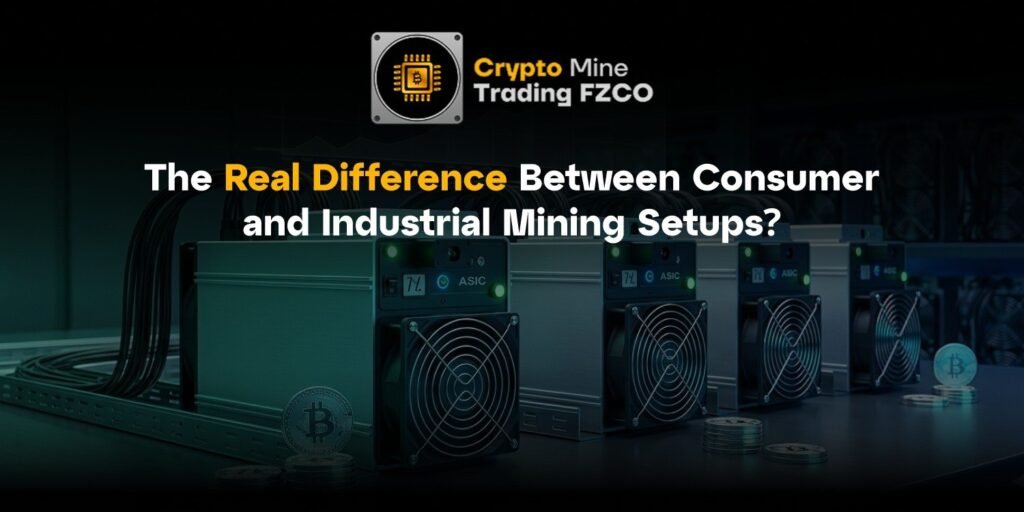
Mining has evolved far beyond individual hobby systems and small home-based operations. In 2026, the gap between consumer mining setups and industrial mining infrastructure is larger than ever.
What once started with individuals running small mining systems has transformed into a global industry powered by large-scale facilities, advanced cooling systems, institutional capital, and energy optimization strategies. Understanding the difference between consumer and industrial mining setups is essential for anyone exploring modern mining economics, profitability, and long-term scalability.
What Is a Consumer Mining Setup?
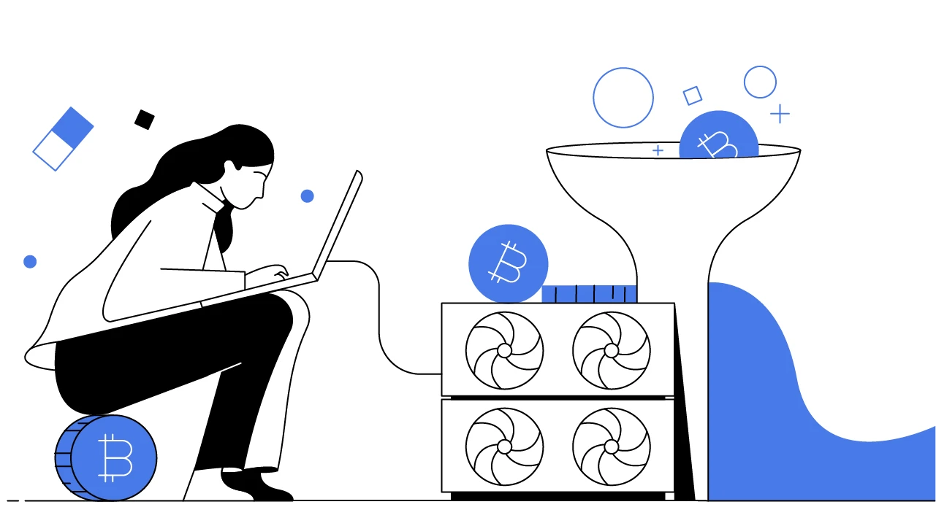
A consumer mining setup usually refers to smaller-scale operations run by individuals or small groups.
These setups are commonly built using:
- Personal GPUs or ASIC miners
- Home electricity connections
- Small cooling systems
- Limited mining capacity
Consumer setups are typically designed for:
- Entry-level mining participation
- Learning and experimentation
- Smaller capital exposure
- Independent operation
In earlier years of crypto mining, consumer systems played a major role in network participation.
Today, however, the market has become significantly more competitive.
What Is an Industrial Mining Setup?
Industrial mining setups operate at a completely different scale.
These facilities are purpose-built environments optimized for maximum efficiency and long-term operational performance.
Industrial mining operations often include:
- Thousands of mining machines
- Specialized infrastructure
- Advanced cooling systems
- Dedicated energy agreements
- Professional operational management
These setups are designed for high-volume output and strategic efficiency rather than simple participation.
Scale Is the Biggest Difference
The most obvious distinction between consumer and industrial mining is scale.
Consumer Mining
- Limited number of machines
- Residential electricity dependency
- Smaller operational output
Industrial Mining
- Massive machine deployment
- Industrial-grade power infrastructure
- High-volume production capacity
Scale allows industrial operations to optimize costs more effectively over time.
Electricity Efficiency Changes Everything
Electricity is one of the most important cost factors in mining profitability.
Consumer setups often rely on residential electricity pricing, which can significantly reduce profitability during market downturns.
Industrial operations usually secure:
- Lower energy rates
- Direct power agreements
- Renewable energy integration
- Energy optimization systems
This creates a major long-term advantage in operational sustainability.
Cooling Infrastructure Creates Performance Gaps
Mining systems generate large amounts of heat.
Consumer setups generally use:
- Fans
- Air conditioning
- Small ventilation systems
Industrial facilities often deploy advanced cooling infrastructure such as:
- Immersion cooling
- Industrial airflow systems
- Climate-controlled environments
- Automated temperature optimization
Better cooling improves machine lifespan, stability, and operational efficiency.
Profitability Structure Is Completely Different
Consumer miners often focus on direct daily profitability.
Industrial operators think more strategically by focusing on:
- Long-term scalability
- Infrastructure efficiency
- Cost optimization
- Operational consistency
- Market cycle positioning
This difference in mindset changes how each setup approaches risk and sustainability.
Risk Exposure Varies Significantly
Consumer setups may face challenges such as:
- Higher electricity costs
- Equipment overheating
- Limited scalability
- Lower operational efficiency
Industrial mining operations carry different risks including:
- Infrastructure investment exposure
- Regulatory changes
- Energy market dependency
- Large-scale operational management
Both models involve risk, but the structure and scale of those risks are very different.
Consumer Mining Is Becoming More Specialized
In earlier years, consumer mining was more accessible because competition levels were lower.
Today, industrial-scale infrastructure dominates many mining sectors, making profitability harder for smaller setups without strategic optimization.
As a result, consumer miners increasingly focus on:
- Niche opportunities
- Lower competition networks
- Specialized mining strategies
- Efficient hardware selection
The market has become far more professionalized than before.
Industrial Mining Is Now an Infrastructure Business
Large mining companies no longer operate like simple tech setups.
Many now function more like infrastructure organizations focused on:
- Energy management
- Data-center optimization
- Financial efficiency
- Long-term scalability
Mining has evolved into a highly structured operational industry rather than a casual technology experiment.
The Future of Mining Is Efficiency-Driven
As competition increases, the future of mining will likely depend less on raw participation and more on operational intelligence.
The strongest setups will prioritize:
- Energy efficiency
- Infrastructure optimization
- Cooling innovation
- Market adaptability
- Long-term sustainability
This is pushing the mining industry toward increasingly professional and institutional structures.
Final Insight
The difference between consumer and industrial mining setups is no longer just about machine count. It is about operational philosophy, infrastructure efficiency, scalability, and long-term sustainability. Consumer mining focuses on participation and flexibility. Industrial mining focuses on optimization and scale. In 2026, mining is becoming less about simply owning hardware and more about building efficient systems that can survive changing market conditions over time.