







































The mining industry is experiencing a major transformation. Earlier generations of mining were heavily centered around one idea: acquire more hardware. Larger ASIC fleets and higher hashrate numbers were often seen as the main indicators of mining success. But in 2026, the industry has evolved far beyond simple hardware expansion. Modern mining is increasingly becoming infrastructure-focused, where operational efficiency, cooling systems, environmental stability, and scalable architecture now define long-term profitability.
The competitive advantage in mining is no longer created by hardware alone. It is created by the infrastructure supporting it.
The Early Era of Hardware-Focused Mining
In the earlier stages of crypto mining, profitability depended largely on:
- Hardware availability
- Raw hashrate power
- Fast deployment
- Expansion speed
Miners focused heavily on purchasing more ASIC machines because operational competition was relatively lower. During this period, even basic setups could remain profitable without advanced infrastructure systems.
As mining difficulty increased and operational costs became more important, the limitations of hardware-only strategies started becoming visible.
Why Hardware Alone No Longer Guarantees Profitability
Modern ASIC miners are significantly more powerful than previous generations. They operate continuously under heavy industrial load while generating substantial heat and power demand.
Without optimized infrastructure, larger hardware deployments often create:
- Thermal instability
- Airflow imbalance
- Power distribution stress
- Reduced efficiency
- Higher downtime risk
This means powerful hardware alone can no longer sustain strong long-term mining performance.
Infrastructure quality now directly affects how efficiently hardware operates over time.
Mining Has Become an Operational Efficiency Industry
Professional mining farms increasingly compete through:
- Cooling optimization
- Environmental control
- Stable uptime
- Thermal efficiency
- Infrastructure scalability
This shift reflects a broader transformation inside the mining industry. Modern profitability depends heavily on operational consistency rather than aggressive hardware expansion alone.
The strongest mining operations are now engineered systems rather than simple collections of ASIC machines.
Cooling Infrastructure Is Becoming Central to Mining
One of the biggest reasons for this industry shift is thermal management. Modern ASICs generate enormous heat under continuous load.
Without efficient cooling systems, mining farms experience:
- Thermal throttling
- Hardware stress
- Rising electricity waste
- Efficiency degradation
- Increased maintenance frequency
Professional mining facilities now invest heavily in:
- Hydro cooling
- Airflow engineering
- Thermal zoning
- Environmental automation
- Heat distribution optimization
because cooling efficiency directly affects profitability.
Cooling is no longer treated as secondary support infrastructure. It is now part of the core mining strategy.
Why Stable Environments Matter
Infrastructure-focused mining prioritizes environmental stability because ASIC performance depends heavily on operating conditions.
Professional mining farms carefully control:
- Temperature
- Airflow
- Humidity
- Dust exposure
- Heat movement
Controlled environments reduce operational stress and help maintain:
- Better uptime
- Stable efficiency
- Longer hardware lifespan
- Predictable performance
This level of environmental precision is becoming essential in industrial mining.
Power Management Is Now a Competitive Advantage
As mining operations scale, electrical infrastructure becomes increasingly important.
Weak power systems create:
- Voltage fluctuations
- Operational instability
- Downtime risk
- Reduced hardware reliability
Infrastructure-focused mining farms prioritize:
- Stable electrical distribution
- Redundant systems
- Load balancing
- Infrastructure monitoring
because consistent power delivery protects long-term operational performance.
Mining Farms Are Becoming Data Center Environments
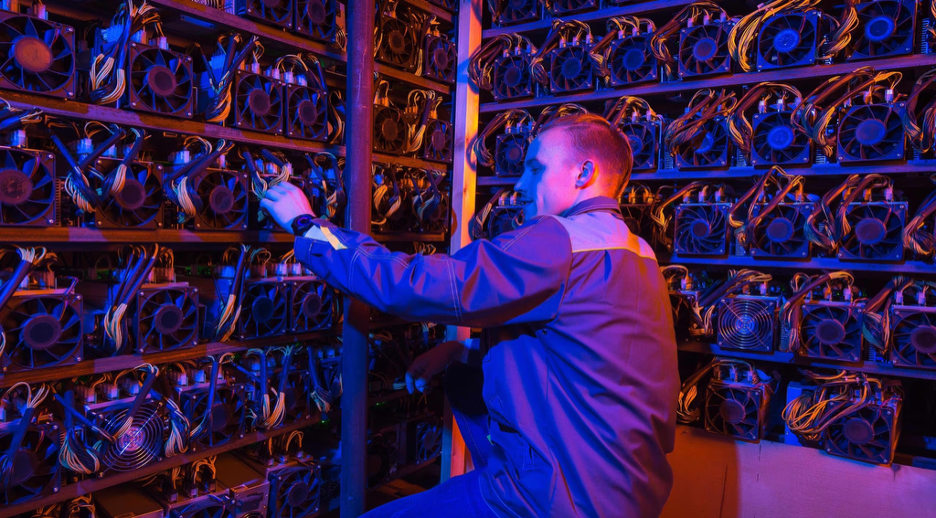
Modern industrial mining increasingly resembles enterprise data center architecture.
Professional operations now use:
- Structured rack systems
- Precision airflow management
- Real-time monitoring
- Environmental automation
- Scalable infrastructure planning
This reflects how mining has evolved into a high-density compute industry where infrastructure engineering determines efficiency.
The future mining farm looks more like a compute facility than a traditional warehouse.
Scalability Requires Infrastructure Planning
Hardware-focused expansion often creates infrastructure bottlenecks. Adding more ASICs without improving supporting systems can cause:
- Cooling overload
- Thermal concentration
- Power strain
- Reduced operational efficiency
Infrastructure-focused mining allows operations to scale more predictably because facilities are designed around:
- Environmental balance
- Cooling capacity
- Electrical readiness
- Structured expansion planning
Professional operators now scale infrastructure first and hardware second.
Why Monitoring Systems Matter
Infrastructure-focused mining relies heavily on operational intelligence.
Modern mining farms monitor:
- Thermal behavior
- Hardware efficiency
- Power consumption
- Environmental consistency
- Cooling performance
Real-time monitoring allows operators to identify hidden inefficiencies before they create major financial losses.
This operational visibility has become a major advantage in industrial mining.
The Hidden Cost of Ignoring Infrastructure
Mining farms that focus only on hardware often experience:
- Rising maintenance costs
- Lower efficiency retention
- Increased operational waste
- Shorter hardware lifespan
- Reduced uptime consistency
These hidden losses compound gradually over time.
Professional operations increasingly understand that infrastructure optimization protects profitability more effectively than uncontrolled hardware expansion.
Why Long-Term Mining Requires Stability
Modern mining profitability is becoming more dependent on:
- Predictable operations
- Controlled environments
- Sustainable efficiency
- Infrastructure resilience
Short-term aggressive expansion may increase output temporarily, but unstable systems often struggle to maintain profitability over long operational cycles.
Infrastructure-focused mining creates stronger long-term sustainability.
The Future of Infrastructure-Focused Mining
Future mining environments will likely continue evolving through:
- AI-driven cooling optimization
- Automated environmental control
- Smarter power management
- Predictive maintenance systems
- Sustainable infrastructure design
As mining competition increases, operational intelligence will become one of the industry’s biggest advantages.
Final Verdict
The mining industry is shifting from hardware-focused mining to infrastructure-focused mining because long-term profitability now depends heavily on operational stability, thermal management, power efficiency, and scalable infrastructure systems. Modern mining farms understand that hardware alone cannot sustain competitive performance without intelligent environments supporting it. In 2026, successful mining operations are built around infrastructure engineering, controlled operational systems, and long-term efficiency optimization. The future of mining belongs to operations that manage infrastructure as carefully as they manage hardware.