






































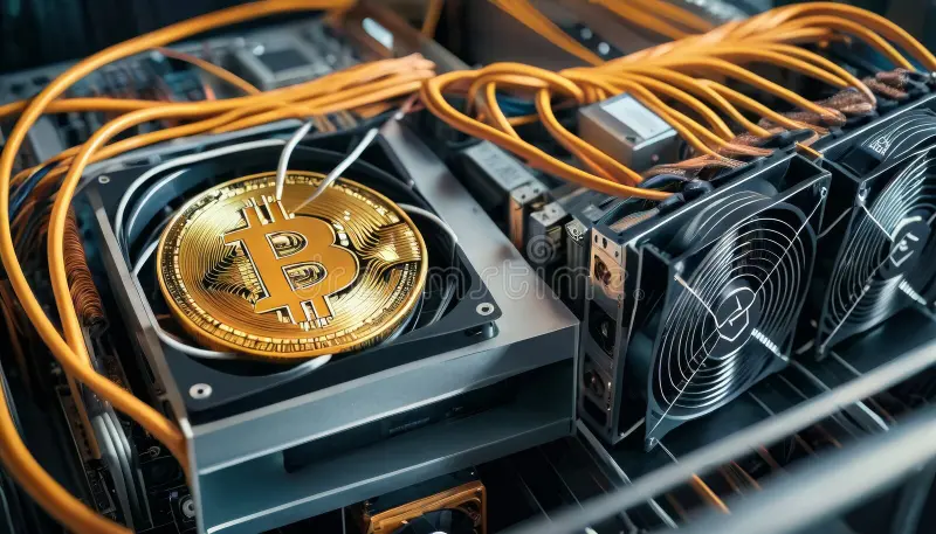
For years, mining success was mostly associated with one thing: buying more powerful hardware. Miners competed through higher hashrates, faster ASICs, and larger machine fleets. But modern mining has changed. Today, the biggest difference between profitable and struggling mining operations is often not the hardware itself. It is the infrastructure supporting it. In 2026, mining profitability increasingly depends on cooling systems, power distribution, thermal management, environmental control, and operational efficiency. This shift is transforming mining from a hardware race into an infrastructure-driven industry.
The Old Mining Model
Older mining strategies focused heavily on machine quantity, peak performance, and rapid scaling. During earlier mining cycles, simply owning stronger hardware often created strong profitability advantages. But as mining competition increased, operational margins became tighter. This exposed a major reality: even powerful ASICs underperform inside weak infrastructure.
Why Hardware Alone No Longer Guarantees Profit
Modern ASICs are extremely powerful, but higher-performance machines also create more heat, greater power demand, increased cooling pressure, and higher operational complexity. Without proper infrastructure, efficiency drops, power waste increases, hardware stress rises, and downtime becomes more common. This means hardware can no longer perform at full potential without environmental optimization.
The Rise of Infrastructure-Driven Mining
Large mining farms now focus heavily on airflow engineering, thermal balance, stable power delivery, and environmental consistency because infrastructure directly affects efficiency retention, long-term ROI, system stability, and operational scalability. Mining farms are increasingly designed like high-density data centers rather than traditional warehouses full of machines.
Cooling Has Become a Core Mining Strategy
Heat is now one of the biggest operational challenges in mining. Poor cooling causes reduced ASIC efficiency, thermal throttling, increased electricity waste, and shorter hardware lifespan. Modern mining farms invest heavily in advanced airflow systems, hydro cooling, thermal containment, and heat distribution control because cooling directly impacts profitability. In many cases, cooling infrastructure now matters more than adding additional hardware.
Why Power Infrastructure Matters More Than Ever
As ASIC performance increases, power demand becomes harder to manage. Weak electrical systems create voltage instability, hardware stress, operational interruption, and reduced mining consistency. Professional operations prioritize stable electrical distribution, redundant power systems, load balancing, and controlled power delivery because stable power protects long-term efficiency.
Infrastructure Defines Scalability
Many mining farms struggle during expansion because infrastructure was never designed for scale. Adding more machines without improving infrastructure often creates cooling bottlenecks, power overload, thermal concentration, and reduced overall efficiency. This is why smart operators scale infrastructure before scaling hardware.
The Hidden Cost of Poor Infrastructure
Infrastructure problems often develop slowly. Miners may not immediately notice minor airflow imbalance, small thermal inefficiencies, or gradual power instability. But over time, these issues create higher operational cost, lower efficiency, increased maintenance, and reduced profitability. Long-term mining losses usually come from operational inefficiency rather than sudden hardware failure.
Why Industrial Mining Farms Think Differently
Large-scale mining operations rarely focus only on hardware specifications. Instead, they prioritize predictable thermal behavior, stable uptime, controlled environments, and infrastructure optimization because stable systems consistently outperform unstable high-output setups over long periods.
Mining Is Becoming an Engineering Industry
Modern mining increasingly resembles data center operations, industrial infrastructure management, and high-density compute engineering. This means success now depends on environmental control, system design, operational discipline, and infrastructure intelligence more than simply buying the latest ASIC model.
The Shift Toward Controlled Environments
Professional mining farms are moving toward hydro cooling systems, immersion cooling, smart airflow architecture, and isolated thermal zones. These systems help maintain efficiency, reduce operational stress, and improve long-term hardware stability. The focus is no longer just producing more hashrate. The focus is sustaining efficient performance over time.
Why Stability Beats Peak Performance
Many mining setups achieve strong short-term output. But sustainable profitability depends on consistent uptime, stable thermal conditions, controlled operating cost, and reliable infrastructure behavior. Mining farms built around stable infrastructure often outperform farms running stronger hardware inside poor environments.
The Future of Mining Infrastructure
As mining hardware becomes more advanced, infrastructure importance will continue increasing. Future mining operations will likely focus even more on energy optimization, smart cooling systems, predictive maintenance, environmental automation, and infrastructure intelligence. The competitive advantage is shifting from raw hardware ownership to operational system quality.
Final Verdict
Mining infrastructure is becoming more important than hardware because modern mining is no longer just about processing power. It is about efficiency sustainability, thermal management, operational stability, and infrastructure optimization. The most profitable mining farms in 2026 are not simply buying the most powerful machines. They are building the most efficient systems around them. Because in modern mining, hardware creates potential, but infrastructure determines whether that potential becomes profitable.