








































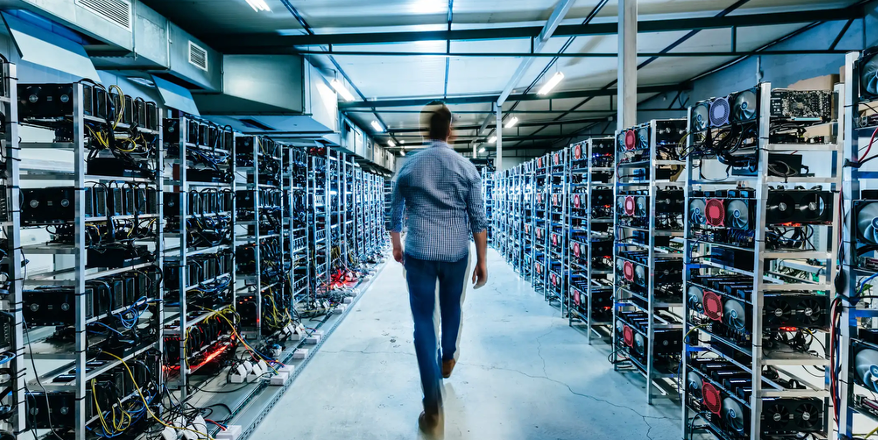
Modern mining farms are no longer simple rooms filled with ASIC machines.
Industrial Bitcoin mining has evolved into a highly engineered infrastructure business where environmental stability directly impacts profitability. Professional mining farms now prioritize controlled environments because hardware performance depends heavily on the conditions surrounding it. In 2026, efficiency, uptime, and long-term ROI are increasingly determined by how stable the mining environment remains under continuous industrial load.
What Is a Controlled Mining Environment?
A controlled mining environment is a mining facility designed to regulate:
- Temperature
- Airflow
- Humidity
- Dust exposure
- Power stability
- Heat distribution
Instead of allowing machines to operate under uncontrolled conditions, professional farms create structured environments that maintain operational consistency around the clock.
This approach helps ASIC miners perform more efficiently over long periods.
Why Environmental Stability Matters in Mining
ASIC miners operate continuously under heavy computational load. During nonstop operation, machines generate significant heat and consume large amounts of power. Without environmental control, this creates:
- Thermal imbalance
- Airflow disruption
- Rising operational stress
- Efficiency decline
Professional mining farms understand that stable operating conditions protect both hardware performance and long-term profitability.
Heat Is One of the Biggest Threats to Mining Efficiency
Heat directly impacts ASIC performance. Poor thermal conditions can lead to:
- Increased power waste
- Reduced efficiency
- Thermal throttling
- Higher failure rates
- Shorter hardware lifespan
Controlled environments help maintain balanced temperatures across mining systems, reducing hidden efficiency loss caused by uneven thermal buildup.
This is one reason professional operations invest heavily in cooling infrastructure.
Why Airflow Engineering Is Critical
Airflow is no longer treated as a secondary consideration in modern mining farms.
Poor airflow design creates:
- Hotspots
- Heat recirculation
- Uneven cooling
- Reduced operational stability
Professional mining facilities engineer airflow systems carefully to ensure:
- Consistent intake temperatures
- Efficient heat removal
- Stable thermal behavior
Balanced airflow helps ASICs maintain stronger long-term performance under continuous operation.
Controlled Environments Protect Long-Term ROI
Mining profitability is not only about daily revenue.
Long-term profitability depends on:
- Stable uptime
- Efficiency retention
- Reduced maintenance
- Controlled operational cost
Unstable environments slowly reduce mining performance over time. Professional operators focus on environmental consistency because small inefficiencies compound into major financial losses across large-scale operations.
Why Dust and Humidity Matter
Dust accumulation can block airflow and increase thermal stress inside ASIC systems. Excess humidity can also create electrical reliability issues over time.
Controlled mining environments reduce exposure to:
- Airborne particles
- Moisture fluctuations
- External environmental instability
This helps maintain cleaner and more predictable operating conditions for industrial hardware.
The Link Between Controlled Environments and Uptime
Every minute of downtime affects mining profitability.
Professional mining farms prioritize stable environmental conditions because:
- Consistent temperatures reduce hardware stress
- Balanced airflow improves reliability
- Stable systems experience fewer interruptions
Higher uptime creates more predictable operational performance over long mining cycles.
Why Large Farms Are Moving Toward Data Center Design
Modern mining facilities increasingly resemble enterprise data centers.
Operators now use:
- Isolated thermal zones
- Precision cooling systems
- Environmental monitoring
- Smart airflow management
- Industrial power distribution
This shift reflects the growing importance of infrastructure engineering in mining profitability.
Mining farms are becoming compute-focused operational environments rather than simple hardware storage facilities.
Controlled Environments Improve Scalability
Scaling mining operations becomes difficult when environmental conditions are unstable.
Adding more machines without improving infrastructure often causes:
- Thermal concentration
- Cooling bottlenecks
- Power instability
- Reduced system efficiency
Controlled environments allow mining farms to scale more predictably while maintaining operational consistency.
Why Modern ASICs Depend on Environmental Optimization
New-generation ASIC miners are extremely powerful and densely packed with high-performance chips.
These systems require:
- Stable airflow
- Controlled cooling
- Predictable operating conditions
Without environmental optimization, even advanced hardware struggles to maintain peak efficiency under continuous load.
This is why infrastructure quality increasingly matters more than hardware specifications alone.
The Shift Toward Infrastructure-Driven Mining
Mining is evolving from a hardware-focused industry into an infrastructure-driven business.
Professional operations now compete through:
- Efficiency optimization
- Thermal management
- Environmental control
- Operational stability
The farms that manage infrastructure intelligently often outperform operations relying only on raw hardware power.
The Future of Controlled Mining Facilities
The future of industrial mining will likely include:
- Smarter environmental automation
- AI-driven cooling optimization
- Advanced airflow engineering
- Hydro and immersion cooling systems
- Predictive thermal monitoring
As mining competition increases, controlled environments will become even more important for maintaining profitability.
Final Verdict
Professional mining farms prioritize controlled environments because modern mining performance depends heavily on operational stability.
Stable environments help protect:
- ASIC efficiency
- Thermal consistency
- Hardware lifespan
- Long-term profitability
In 2026, successful mining operations are no longer built only around powerful hardware. They are built around intelligent infrastructure and controlled operational environments.
Because in modern mining:
The environment around the machine is often just as important as the machine itself.